
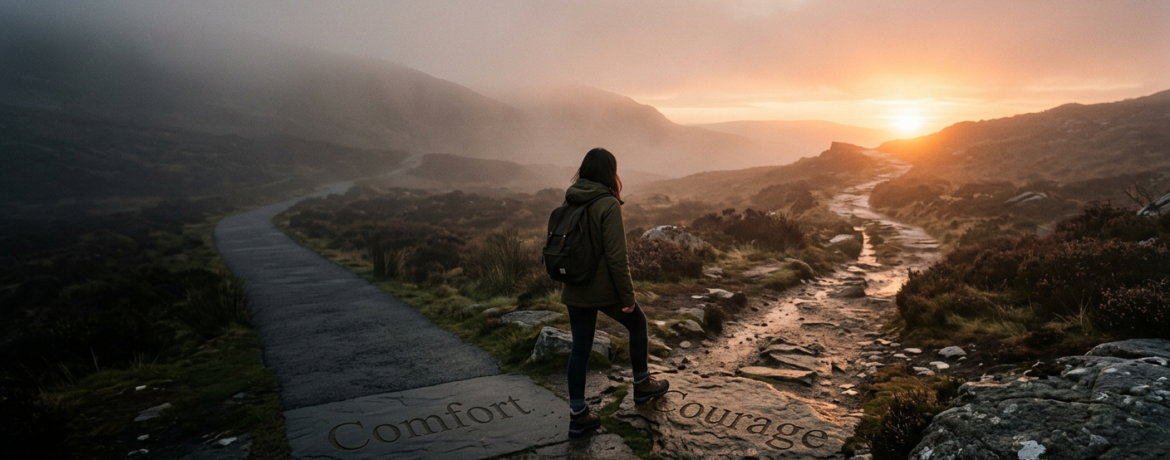
The hero is not the person who is fearless. The hero is the person who knows the risk and moves forward anyway.
This week I witnessed something that struck me as genuinely heroic.
Veteran journalist Scott Pelley stood before executives at CBS and publicly challenged what he believed had happened to one of the most respected news programs in American history. For decades, 60 Minutes pursued difficult stories and asked hard questions regardless of who was in power. Whether one agrees with every story they produced is beside the point. The point is that journalism, at its best, is supposed to seek the truth wherever it leads.
Pelley’s willingness to speak openly in defense of that principle reminded me of something we do not talk about enough today: courage.
We live in a time when courage and cowardice are often confused. People mistake loudness for bravery and silence for wisdom. They mistake loyalty for integrity. But courage has never been about any of those things.
The Hero is not the person who is fearless. The hero is the person who knows the risk and moves forward anyway.
The Coward is not necessarily someone who is afraid. We are all afraid. The coward is someone who knows what is right and runs from it.
Throughout history we have looked to people who embodied moral courage. One example is Abraham Lincoln. Lincoln was not a perfect man. No leader is. But during the greatest crisis in American history, he remained committed to preserving the Union and expanding the promise that all people are created equal. He faced criticism, threats, and unimaginable pressure, yet he continued forward.
What made Lincoln heroic was not perfection. It was conviction.
Heroes live by values larger than themselves. Cowards live by self-preservation. The difference is important.
When people abandon their values for personal gain, comfort, approval, or power, they begin to lose themselves. They stop asking, “What is right?” and start asking, “What benefits me?”
Psychologically, this is a dangerous shift. Human beings are capable of convincing themselves that almost anything is justified if it protects their interests. History is filled with examples of ordinary people who went along with harmful ideas because questioning them felt too uncomfortable or too costly.
We saw this dynamic on January 6th. Many participants believed they were acting patriotically. Whether one views them as criminals, misguided citizens, or something in between, the psychology is important. When people stop questioning information that confirms what they already believe, they become vulnerable to manipulation. Blind loyalty is never a substitute for critical thinking.
Democracy depends upon people being willing to question authority, including the leaders they admire.
The challenge today is that many people feel powerless. They look at political conflict, social division, economic uncertainty, and global crises and ask, “What can I do?”
I remember asking that same question in a college class during a discussion about the Civil Rights Movement. Another student looked at me and said one word:
“Something.”
That answer stayed with me. Not everything. Not solving the world’s problems. Just something.
A PLACE TO BEGIN
- Write a letter
- Donate to a cause you believe in
- Volunteer
- March
- Support someone whose work you respect
- Have a difficult conversation
- Stand up for someone being mistreated
- Tell the truth
History is rarely changed by a single heroic act. More often, it is changed by ordinary people repeatedly choosing courage over comfort.
There is an old warning that emerged from the tragedies of the twentieth century: when they came for others, I did nothing. When they came closer, I did nothing. Then they came for me. The lesson is not political. It is human.
Silence can become a habit. So can courage.
What fascinates me as a therapist is that heroes are not born heroes. Most are ordinary people. Many have spent their entire lives avoiding conflict and taking the safest path. Then a crisis occurs and something changes. A hidden part of them emerges. They discover strengths they never knew they possessed.
The same is true of cowardice. Neither courage nor cowardice is fixed. They are choices.
Every day we make small decisions about who we want to be. Do we speak up or remain silent? Do we tell the truth or avoid discomfort? Do we stand with our values or abandon them when it becomes inconvenient?
The hero chooses values over fear. The coward chooses fear over values. Each of us, at different moments in our lives, has been both.